You’ve booked the train to Machu Picchu, you’ve got your Rainbow Mountain trek lined up, and you’re ready for that pisco sour in Cusco’s Plaza de Armas. These are the experiences every Peru itinerary is built on—and for good reason. But what if, after the fifth selfie stick at a famous viewpoint, you find yourself craving something more? Something that feels less like a checklist and more like a discovery? That’s the moment you start looking for the hidden gems in Peru.
This guide is for travelers who want to earn their stories. We’re venturing off the well-worn tourist trail to uncover places that offer a deeper connection to Peru’s landscapes and cultures. Expect practical, step-by-step advice on how to reach these spots, what they’ll cost, and what makes each one truly special. Whether you have two weeks or two months, this guide will help you swap a few crowds for a whole lot of wonder.
📍 What Defines a Hidden Gem in Peru Today?
The definition of a hidden gem has shifted. It’s no longer just about a place that’s hard to reach; it’s about an experience that feels authentic and uncrowded, even if it’s moderately well-known. A true hidden gem in Peru today is a destination that preserves a sense of discovery. It might be a lesser-known Incan site where you can still hear the wind instead of tour guides, a remote waterfall where you might have the plunge pool to yourself, or a colonial town that feels frozen in time because the tour buses haven’t arrived yet.
These places often require a bit more effort to reach—an extra bus ride, a longer hike, or simply doing a little more research. But that effort is rewarded with a more personal experience. What surprises many first-time travelers is just how much of Peru remains in this category. While the Sacred Valley bustles, vast stretches of the Andes and the Amazon are waiting to be explored by those willing to step just a little further off the map.
When researching hidden gems, look for places that require a combination of transport (e.g., bus + colectivo + short hike). The extra logistical step is often what filters out the large tour groups, leaving the experience for independent travelers like you.
🏞️ 1. Gocta Falls: The Colossus You’ve Never Heard Of
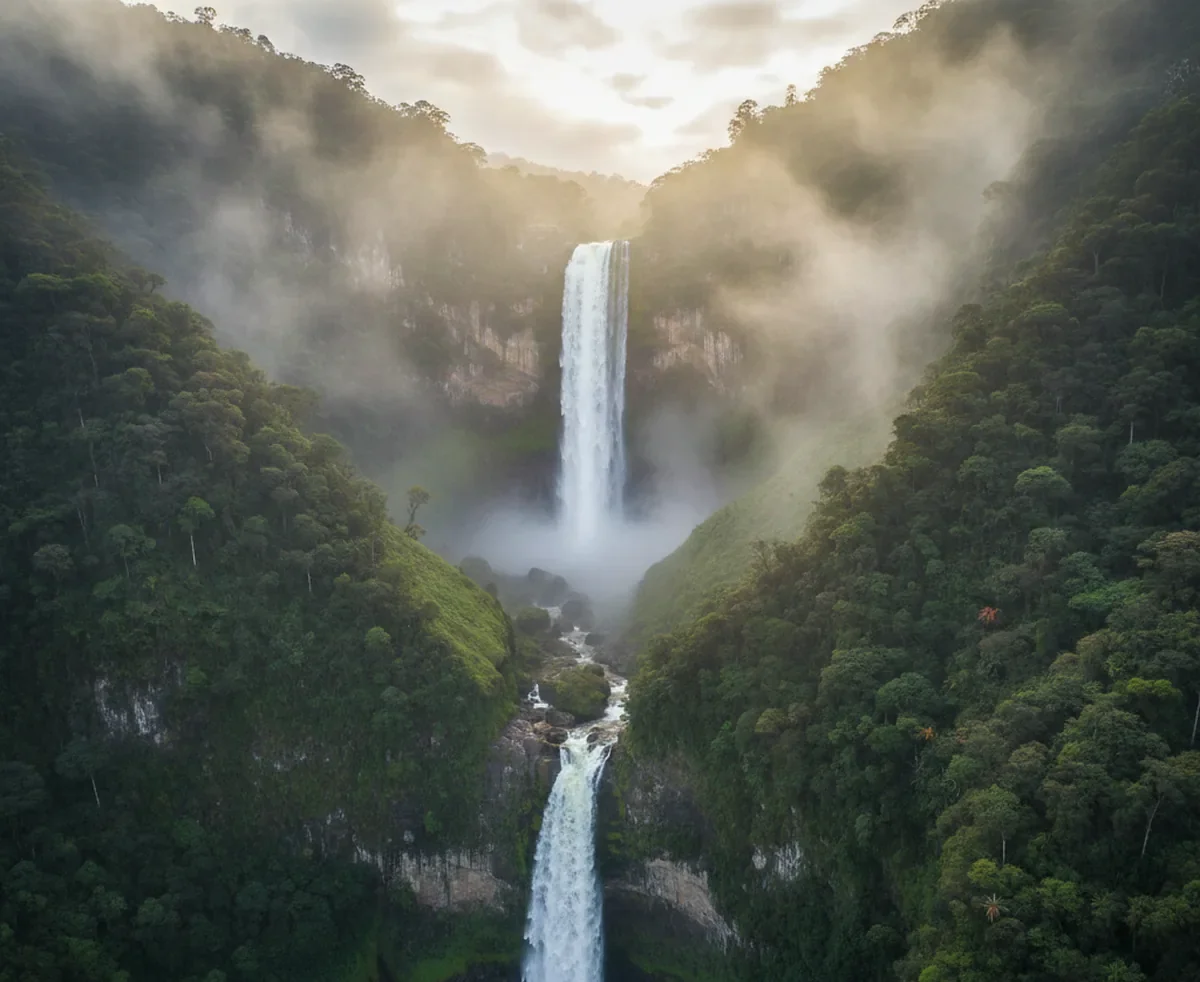
For decades, the world believed Angel Falls in Venezuela was the tallest. But locals in the remote Amazonas region knew about a hidden giant they called La Chorrera. It wasn’t until a German researcher was shown the falls in 2005 that the world learned the truth: Gocta is one of the tallest waterfalls on Earth, plummeting an astonishing 771 meters (2,530 ft) in two dramatic drops. The magic of Gocta isn’t just its height; it’s the journey to get there and the feeling of being in a place that was, until very recently, a local secret.
How to Visit: The journey starts in the charming, whitewashed town of Chachapoyas. From there, you’ll take a colectivo or taxi (about 1.5 hours) to the village of Cocachimbo or San Pablo, the two main trailheads. The hike to the base of the falls is a spectacular 2-3 hour trek through cloud forest, past orchids, toucans, and howler monkeys. You’ll feel the mist long before you see the full scale of the cascade.
Entrance Fee: 20 PEN (approx. $5.50 USD) – goes directly to the local community.
Guide (Optional but recommended): ~50 PEN ($14 USD) for a local guide who will show you hidden viewpoints and spot wildlife.
Colectivo from Chachapoyas: 15-20 PEN ($4-5.50 USD) each way.
⛰️ 2. Choquequirao: Machu Picchu’s Undiscovered Sister
If you have the legs and the spirit for a true adventure, Choquequirao is your reward. Often called the ‘sacred sister’ of Machu Picchu, this sprawling Incan citadel is architecturally and spiritually similar but sees fewer than 20 visitors a day. Perched on a forested ridge high above the roaring Apurímac River canyon, its scale is breathtaking. Massive, terraced complexes cascade down the mountainside, many still being reclaimed from the jungle by archaeologists. A common mistake I see is people underestimating the trek. This is not a day trip.
Plan A (The Full Trek): A 4-day, 3-night round-trip hike from Cachora. It’s challenging, involving a steep descent into the canyon and an even steeper ascent out on both ends. You’ll camp under the stars and arrive at the site early in the morning, often having the entire place to yourself for a few hours.
Plan B (The Easier Approach): A growing number of operators now offer a combination of hiking and transport by cable car or vehicle to a point much closer to the site, significantly reducing the trekking days. This is a great alternative if you’re short on time or prefer not to do the full multi-day hike.
I met an archaeologist working at Choquequirao who told me that new structures are still being discovered every year. He pointed to a hillside covered in thick brush and said, “There’s a whole neighborhood under there we haven’t touched.” Standing there, looking at the terraces spilling down the mountain and knowing that most of it is still hidden, gave me a profound sense of being present at a place still in the process of revealing its secrets. It feels less like a museum and more like an active discovery.

🌊 3. The Turquoise Pools of Llachón (Lake Titicaca)
Most visitors to Lake Titicaca take a tour to the famous Uros Floating Islands and then maybe stay overnight on Taquile or Amantaní. While these are wonderful experiences, they’ve become very structured. For a dose of pure, laid-back lake life, head to the peninsula of Llachón. Located a few hours from Puno, this Quechua community offers homestays right on the water’s edge. Here, you’re not a tourist on a strict schedule; you’re a guest. You can help prepare lunch, learn to weave, or simply sit on the shore as the sun sets over the world’s highest navigable lake.
The real hidden gem here, however, are the crystal-clear, turquoise pozas (pools) just off the peninsula. You can kayak or take a short boat ride to these sheltered natural pools for a swim in the surprisingly clear (and cold!) water, with the vastness of the lake stretching out before you. It’s a serene, almost surreal experience.

🐆 4. Taricaya Ecological Reserve (Puerto Maldonado)
The Amazon is not a hidden gem in itself, but finding a place that balances accessibility, conservation, and authentic experience can be. Near Puerto Maldonado, the Taricaya Ecological Reserve is exactly that. It’s one of the few projects in the region that combines a private conservation area with a genuine lodge experience. A common mistake I see is travelers booking the cheapest, closest lodge to the airport without realizing they’ll be in a heavily trafficked area. Taricaya offers a different pace. You’ll participate in ongoing projects, like releasing baby taricaya turtles (hence the name) into the river or monitoring camera traps for jungle cats. It feels like you’re contributing to the forest, not just passing through it.
⚔️ 5. The Sarcophagi of Karajía (Amazonas)
Not far from Chachapoyas, and on the way to Gocta, lies one of Peru’s most eerie and impressive archaeological sites: the sarcophagi of Karajía. These aren’t just burial boxes; they are six-foot-tall, anthropomorphic clay coffins, complete with carved heads and skulls, perched precariously on a narrow ledge halfway up a sheer cliff face. Dating back to the pre-Incan Chachapoya culture, they have guarded their mountain for centuries. You view them from a platform on the opposite side of the ravine, which offers a clear, dramatic view. It’s a short, steep hike down from the road and takes less than an hour to visit, making it a perfect stop en route to or from Gocta.

🧭 Your Quick Decision Helper
To help you decide which of these hidden gems in Peru fits your travel style, here’s a quick breakdown:
- 🏔️ Gocta Falls: Best for nature lovers & waterfall chasers | Not ideal for those with very limited mobility.
- ⛺ Choquequirao: Best for avid hikers & archaeology buffs | Not ideal for casual day-trippers or those afraid of heights.
- 🚣 Llachón: Best for cultural immersion & relaxation | Not ideal for travelers seeking nightlife or luxury resorts.
- 🐢 Taricaya: Best for eco-conscious travelers & wildlife enthusiasts | Not ideal for those wanting a quick, easy Amazon fix.
- 💀 Karajía: Best for history buffs & those short on time in Chachapoyas | Not ideal for anyone averse to seeing ancient human remains.
❌ 5 Common Mistakes When Seeking Hidden Gems
❌ Mistake 1: Assuming ‘hidden’ means empty year-round.
✔ Better Approach: Even hidden spots have peak seasons (e.g., Gocta is busiest during Peruvian holidays in July). Check a local calendar or ask your accommodation.
❌ Mistake 2: Not budgeting extra time for transport.
✔ Better Approach: For every journey you plan, add a 20-30% time buffer. Buses get delayed, roads get muddy, and that’s all part of the adventure.
❌ Mistake 3: Relying on ATMs in small towns.
✔ Better Approach: Withdraw enough soles in the nearest big city (Chachapoyas, Abancay, Puno) before heading to remote areas. Many hidden gems don’t have card facilities.
❌ Mistake 4: Overpacking for multi-day hikes.
✔ Better Approach: Use a duffel bag for a mule or porter to carry the bulk, and keep a small daypack for your water, camera, and layers. Your back will thank you on day three.
❌ Mistake 5: Not learning basic Spanish phrases.
✔ Better Approach: In places like Llachón or Cocachimbo, English is rarely spoken. Learning greetings and polite phrases transforms the interaction from transactional to genuinely warm.
Before heading off the beaten path, double-check this list:
✔ First-Aid Kit: Include blister care, antiseptic, and any personal meds.
✔ Water Purification: Tablets or a Steripen are essential for longer treks.
✔ Cash (Soles): Small denominations for entrance fees, snacks, and tips.
✔ Printed Confirmations: Don’t rely solely on your phone for bookings.
✔ Insect Repellent: Especially vital for the Amazon and cloud forests.
✔ Headlamp: Power outages happen, and you’ll need it for early morning treks.

❓ Frequently Asked Questions About Peru’s Hidden Gems
Yes, generally they are very safe. However, they require more personal responsibility. Always hike with a guide where recommended, inform someone of your plans, and ensure you have adequate travel insurance that covers trekking activities.
No, not on the classic 4-day trek. However, the new ‘Plan B’ involving cable car access from the other side may eventually lead to day-trip options. For now, the trek requires camping, though some operators offer basic lodge options on the trail, which is a comfortable middle ground.
The dry season from May to September offers clearer skies and a less muddy trail. However, the waterfall is most powerful just after the rainy season (April-May and October-November), though you risk cloudy conditions obscuring the top.
You can absolutely go independently. Take a colectivo from Puno’s main terminal to the town of Llachón (about 2 hours). Upon arrival, families offering homestays will often meet the bus, or you can ask around. It’s a very well-organized community tourism initiative.
They offer a completely different experience. While Rainbow Mountain and Humantay Lake are stunning, they are now mass tourism destinations with hundreds of daily visitors. The hidden gems in this guide offer solitude, a deeper cultural exchange, and the feeling of discovery that the more famous spots have largely lost.
✨ Your Journey to Peru’s Best-Kept Secrets
Exploring the hidden side of Peru isn’t just about checking more places off a list. It’s about changing the rhythm of your travels—trading hurried photo stops for slow conversations, and crowded viewpoints for quiet moments of awe. Whether you’re standing at the base of Gocta, kayaking in Llachón, or gazing at the sarcophagi of Karajía, you’ll be experiencing a Peru that rewards the curious and the adventurous. These hidden gems in Peru are waiting, not to be conquered, but to be discovered. Ready to start planning? Check out our Complete Cusco Guide for a home base to many of these adventures, or save this post for when you’re ready to build your ultimate off-the-beaten-path itinerary. Which of these spots surprised you the most? Let us know in the comments!
Last Updated: May 2024